Arron Levi Foster: Almost, Everything
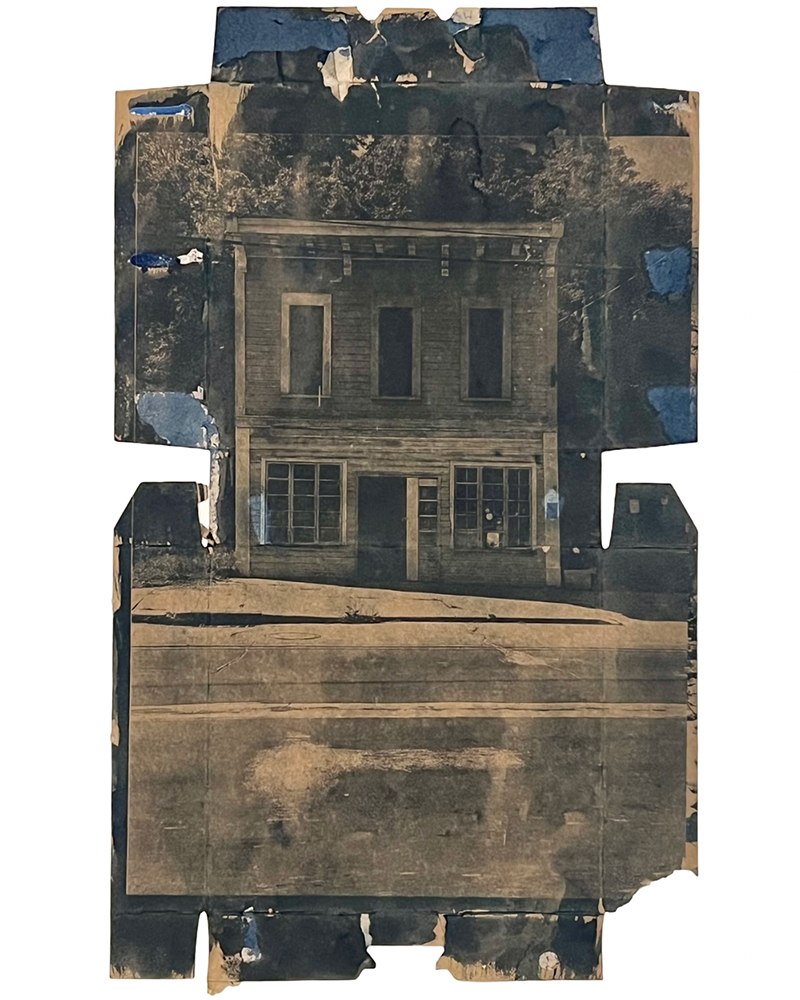
©Arron Levi Foster, Du und ich A, Cyanotype on post consumer waste
I’ve been acquainted with Arron Levi Foster’s work for a few years now. I first came across it through the exhibition landscapes: peculiar interpretations, exhibited through Midwest Nice Art, an art collective I founded with my husband, Tim Rickett, and has since exhibited with us numerous times. His primary focus, landscapes, is one of the oldest subject matters in the art world, but the images are anything but typical. Foster’s attention to material is admirable, being able to turn everyday scenes into a profoundly unique experience, incorporating screenprinting, cyanotypes, with handmade paper, fabic, and installation. I’m always very drawn to artists who are willing to experiment and work prolifically, and Foster does both. I highly recommend following along with his work, you will be inspired!
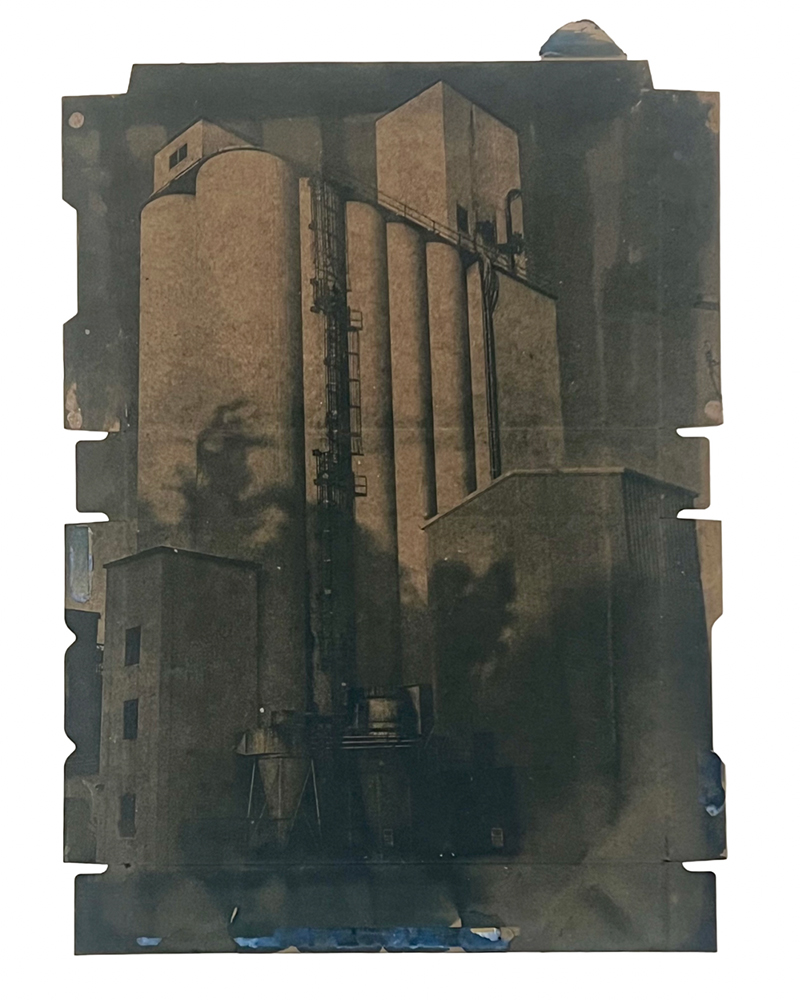
©Arron Levi Foster, Du und ich B, Cyanotype on post consumer waste
Arron Foster is a printmaker, interdisciplinary artist, and educator whose work explores landscape, memory, and the shifting boundaries between personal and public space. He holds an MFA in Printmaking and Book Arts from University of Georgia and a BFA in Printmaking and Art Education from East Carolina University. He currently serves as an Assistant Professor of Art and Visual Culture at Bates College.
Working across printmaking, artists’ books, drawing, video, animation, and installation, Foster employs research-driven and site-responsive methodologies that position print as both index and archive. His projects frequently emerge through sustained engagement with specific environments, translating physical terrain, memory, and lived experience into layered visual forms that examine the relationships between place, history, and human intervention.
His work has been exhibited nationally and internationally, including solo exhibitions at George Fox University, Waterloo Arts, Dayton Society of the Arts, Akron Soul Train Gallery, and Hiram University, as well as participation in the 5th Global Print Exhibition in Portugal and others
Follow Arron on Instagram: @arron_foster_studio
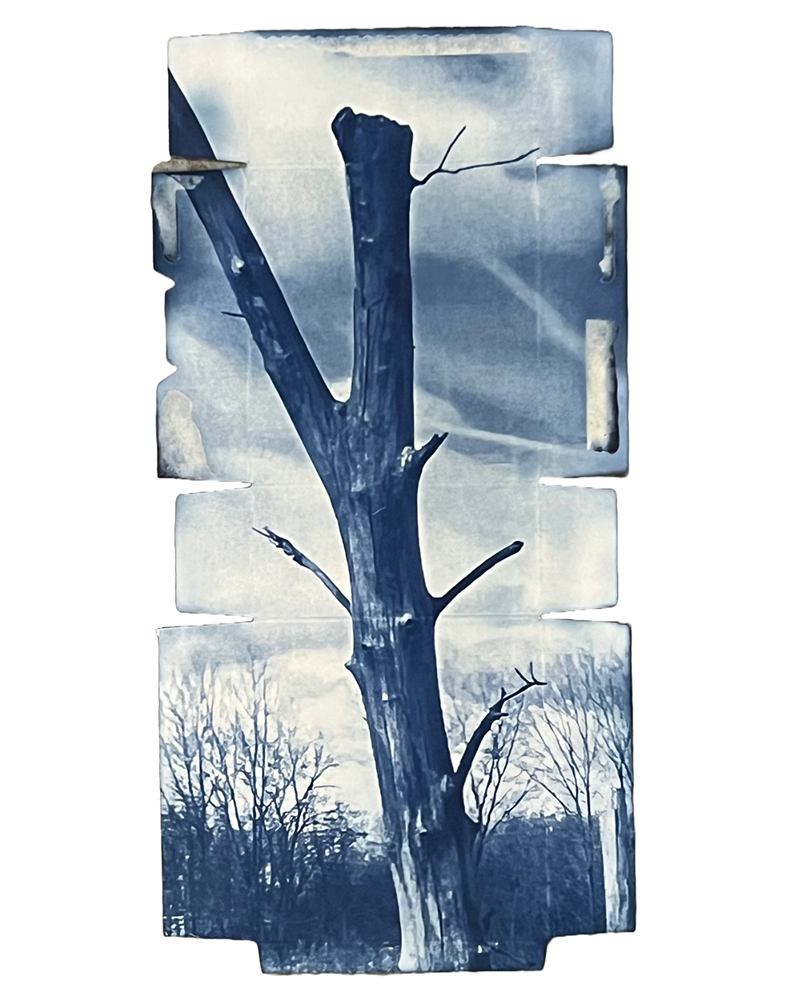
©Arron Levi Foster, Du und ich C, Cyanotype on post consumer waste
Almost, Everything
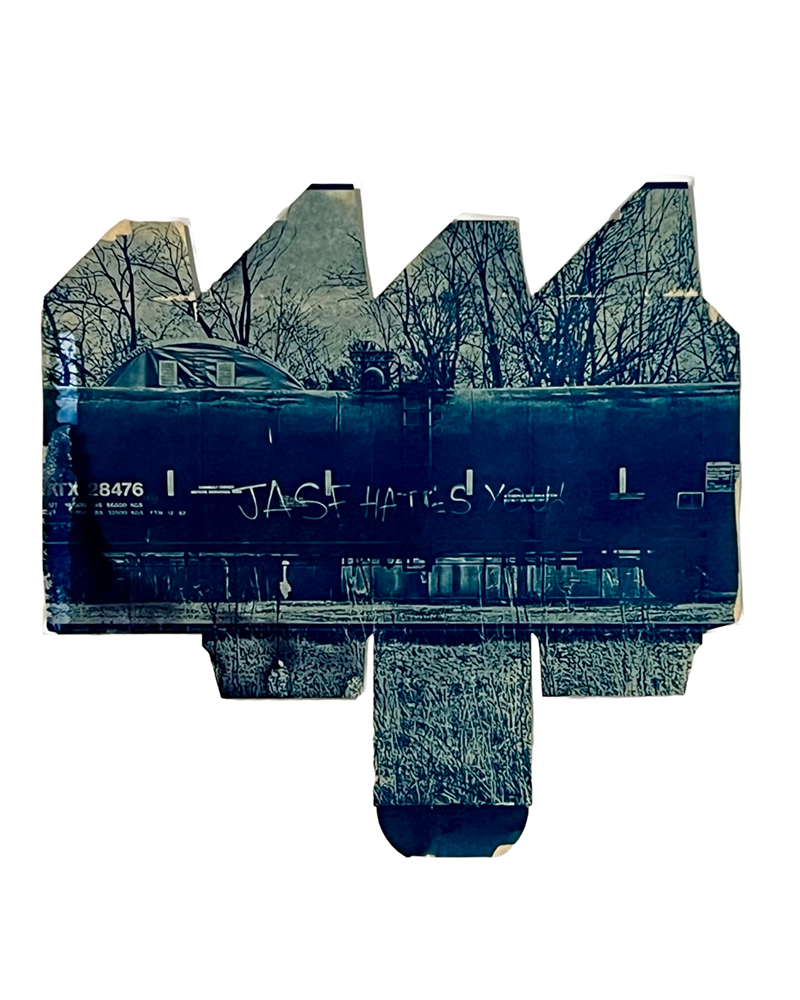
©Arron Levi Foster, Du und ich D, Cyanotype on post consumer waste
Epiphany Knedler: How did your project come about?
Arron Levi Foster: This project developed out of a longer investigation into how we experience and remember place. My background is rooted in printmaking and drawing, and early in my practice I became interested in the fact that printmaking is inherently process-based. An image is built through layers, repetition, translation, and accumulation. I began to wonder whether those qualities could be used not only to construct an image, but to structure how an image is experienced.
That question eventually led me beyond the singular print toward sequential structures, artist’s books, and installation. I became increasingly interested in what happens when an image cannot be consumed instantaneously, but instead unfolds through time. Pages turn, structures expand, images accumulate, and the viewer has to physically participate in the work.
At the same time, my research became increasingly focused on particular landscapes and the histories embedded within them. Since 2022, I have been working extensively with Superfund and brownfield sites across Northeast Ohio, including locations in Kent, Mogadore, Deerfield, Akron, and Canton. These are places shaped by extraction, industry, environmental degradation, and remediation, but they are also places where people live, remember, and construct identities.
The project grew out of that intersection between material process, sustained observation, and environmental history. More recently, this thinking came together through my pinhole photography and artist’s book Almost, Everything. While working in my home darkroom, I acquired a large quantity of expired photographic paper. Rather than seeing that material as obsolete, I began thinking about reuse, limitation, and chance as productive parts of the process. I used simple pinhole cameras to photograph sites along the Cuyahoga River, where the varied exposures required me to remain with each location for an extended period.
Those photographs eventually became an elongated accordion book. The project reinforced a question that continues to shape my practice: What happens when an image asks us to slow down?
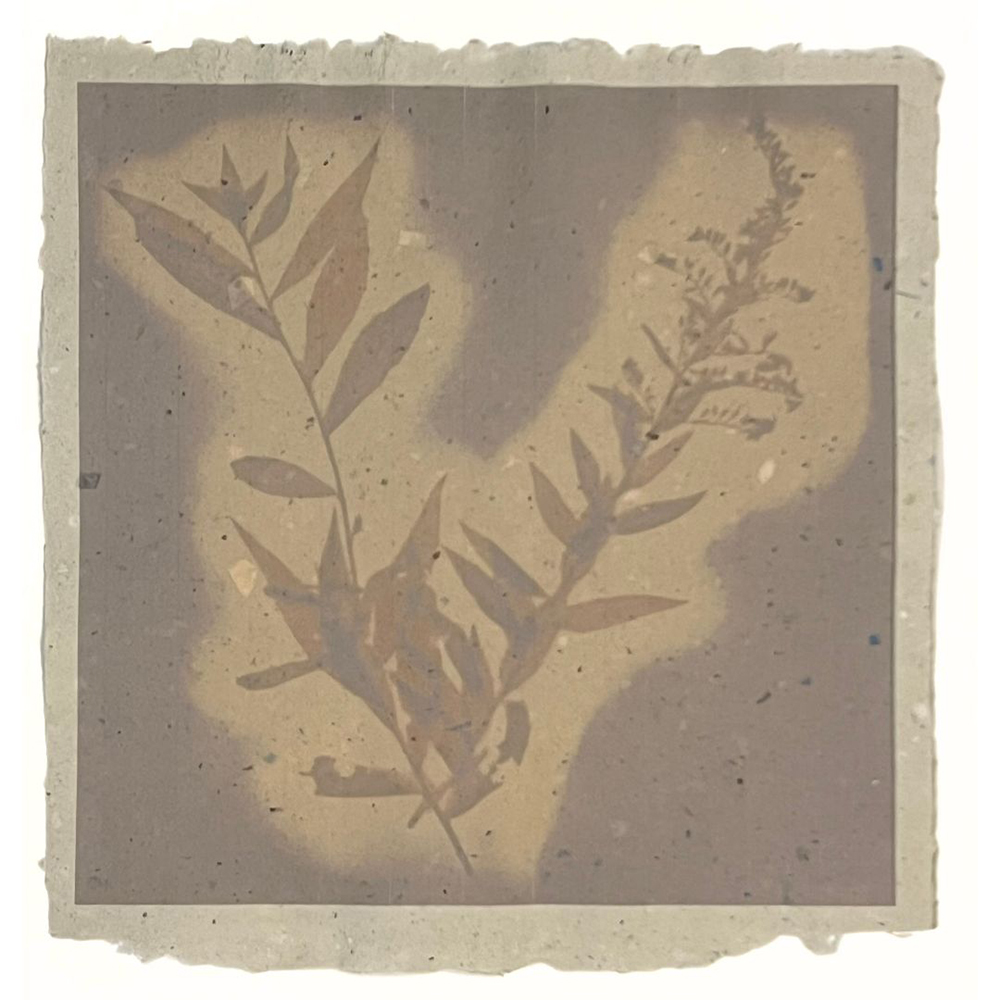
©Arron Levi Foster, Sown with salt, Mogadore Rd. (series), Lumen Print, Pigment Print, Handmade Paper, Screenprint
EK: Is there a specific image that is your favorite or particularly meaningful to this series?
ALF: I am particularly drawn to the landscape imagery in Sown with Salt. What interests me is the tension between the visual experience of the landscape and the complicated environmental history of the places where the images were made.
The project centers on the Mogadore Road brownfield site in Kent, Ohio, the former location of the RB&W industrial fastener plant. The area has a long history of industrial activity and contamination, followed by an ongoing process of remediation. The surrounding landscape can be visually compelling, but that beauty exists alongside a much more complicated history.
That ambiguity is important to me. I don’t want the image to tell the viewer simply that this is a beautiful landscape or that this is a damaged landscape. Both things can be true at the same time. The image becomes a way of entering a larger conversation about memory, environmental change, and the ways we construct meaning around place.
That becomes even more apparent when the imagery enters the book. In Sown with Salt, I use structures such as tunnel books and flag books to layer and repeat images. A tunnel book compresses multiple visual layers into a single sight line, while a flag book creates movement and repetition as it is handled. The image therefore isn’t fixed. It changes depending on how the viewer physically encounters it.
For me, the photograph or print is only one part of the experience. The structure of the book, the paper, the printing process, and the viewer’s physical movement all contribute to the meaning of the image.
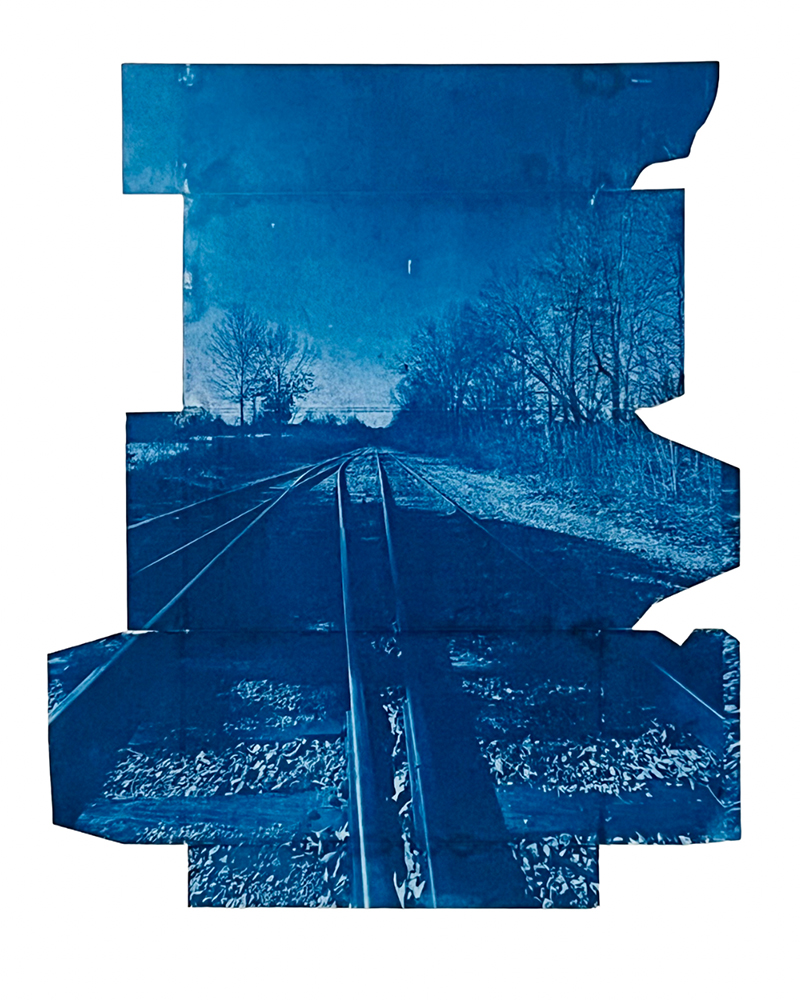
©Arron Levi Foster, Du und ich E, Cyanotype on post consumer waste
EK: Can you tell us about your artistic practice?
ALF: I describe my practice as interdisciplinary, research-driven, and site-responsive. I work across printmaking, artists’ books, drawing, photography, video, animation, and installation, but I don’t think of those mediums as isolated from one another. I am interested in what happens when the structures and processes of one medium begin to inform another.
Printmaking and drawing remain foundational because they are deeply connected to process, iteration, and material engagement. I think of print not simply as a means of reproducing an image, but as a way of organizing information, time, and perception.
A major thread running through my work is what I call experiential watchfulness: sustained acts of observing, documenting, researching, and engaging a particular site. I might spend time walking a landscape, making photographs or drawings, studying archival materials, researching its environmental history, and considering how those different forms of knowledge intersect.
That research often leads me toward places where the landscape carries complicated histories, particularly sites affected by industrialization, extraction, migration, environmental degradation, and remediation. I am interested in how those histories remain present even when the physical evidence begins to disappear.
The artist’s book has become particularly important because it gives me a way to make those layers experiential. A book has rhythm and duration. The viewer has to turn a page, unfold a structure, move through a sequence, or physically manipulate the object. Meaning is produced through that interaction.
This connects to my larger interest in the contemporary image environment. We encounter an enormous number of images every day, and most are designed to be consumed almost instantaneously. My work asks what happens when we construct images that resist that speed.
I therefore think of printmaking and book arts as durational image systems. They create conditions for sustained looking, reflection, and physical engagement.
The environmental dimension of the practice has also become increasingly important. I have experimented with reclaimed photographic materials, handmade papers incorporating locally harvested plant matter, botanical dyes, recycled fibers, and other site-responsive materials. For me, material choices are not separate from the conceptual concerns of the work. The ethics and processes of making become part of the research.
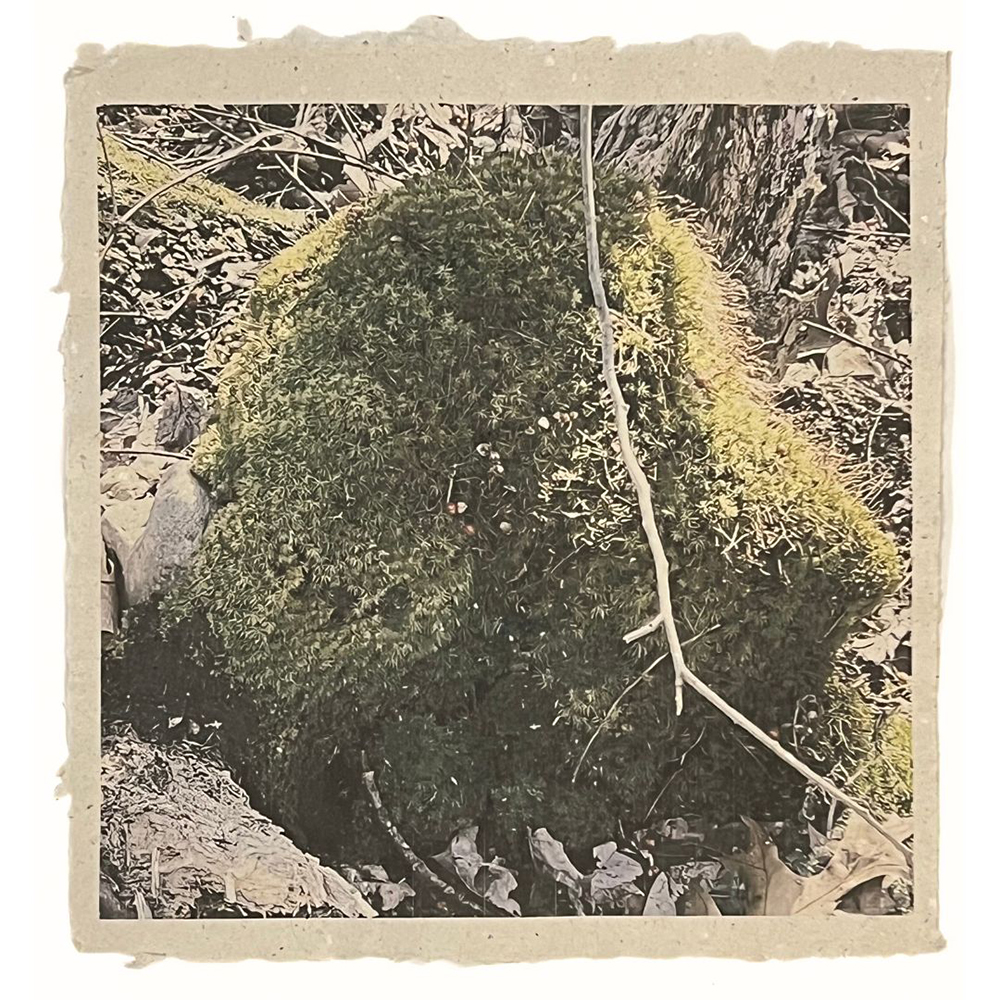
©Arron Levi Foster, Sown with salt, Mogadore Rd. (series), Lumen Print, Pigment Print, Handmade Paper, Screenprint
EK: What’s next for you?
ALF: I see the next stage of my practice as an opportunity to push these ideas further. I am particularly interested in continuing to investigate the relationship between artist’s books, expanded print media, photography, and environmental research.
The work has increasingly moved between the individual print, the book, and installation, and I want to continue exploring what happens when those forms overlap. I am also interested in the artist’s book as more than an artwork or container for images. I see it as a research methodology: a structure that can translate landscape into cognitive, temporal, and embodied experience through sequencing, binding, material, and reader interaction.
Having recently relocated to Maine, I am beginning to consider how this research might develop through sustained engagement with the landscapes of Coastal and Southern Maine. I am interested in approaching this new region with the same kind of experiential watchfulness that has shaped my work in Northeast Ohio, spending time with specific sites and allowing the environmental, cultural, and historical complexities of those places to emerge gradually through observation and research.
The shift in geography also opens new questions. Coastal and Southern Maine contain very different relationships between land and water, industry and environment, rural and urban space, tourism and local communities. I am interested in allowing those differences to shape the work rather than simply transferring an existing methodology to a new location.
My curatorial work with Genius Loci: The Pathos of Place, developed with Erik Waterkotte, has expanded this inquiry through collaboration with artists working across different geographic and cultural contexts. The exhibition has reinforced my interest in how artists use print and related media to investigate place, while extending my own studio research into broader professional and scholarly dialogue.
I am also continuing to develop this research through writing and conference presentations. My recent scholarship examines artists’ books as research methodologies, while my upcoming conference work explores print, book arts, and expanded media as forms that unfold through time, physical presence, and embodied engagement.
Having just begun a position as an Assistant Professor of Art and Visual Culture at Bates College, I am excited about the ways teaching, research, and studio practice can inform one another. I want to continue developing my own work while creating opportunities for students to explore artist’s books, independent publishing, alternative photographic processes, and expanded approaches to printmaking.
Ultimately, what is next is a deeper investigation of the same fundamental question that has been present throughout the work: How can an artwork create the conditions for us to slow down, pay attention, and develop a more meaningful relationship to a place?
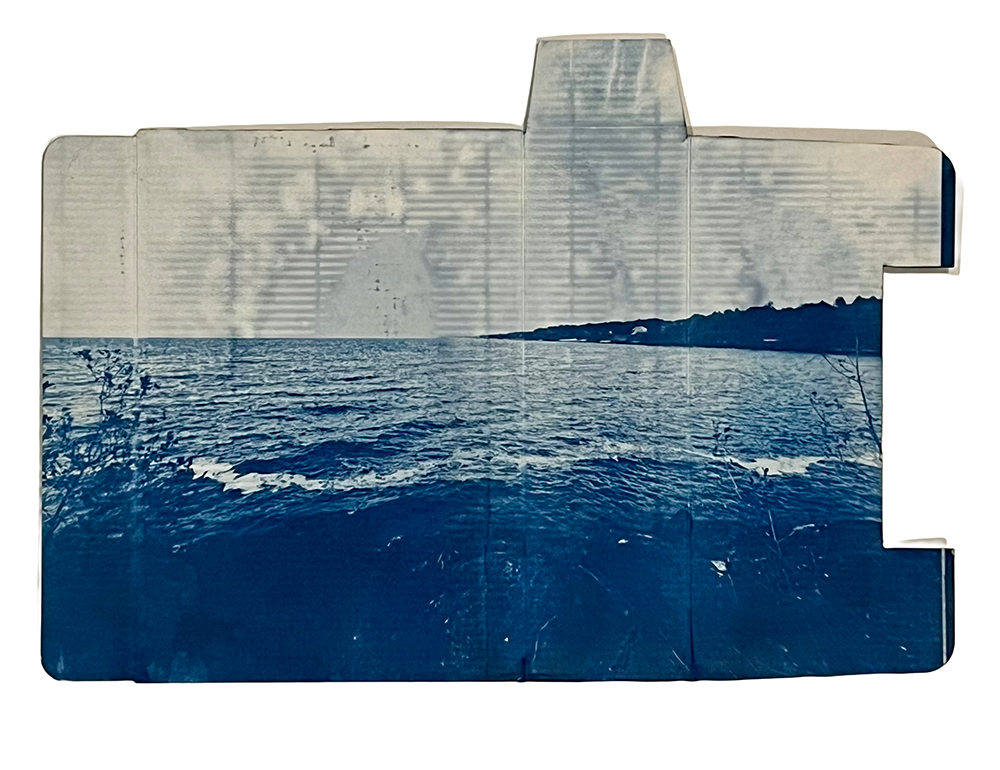
©Arron Levi Foster, Du und ich, Cyanotype on post consumer waste
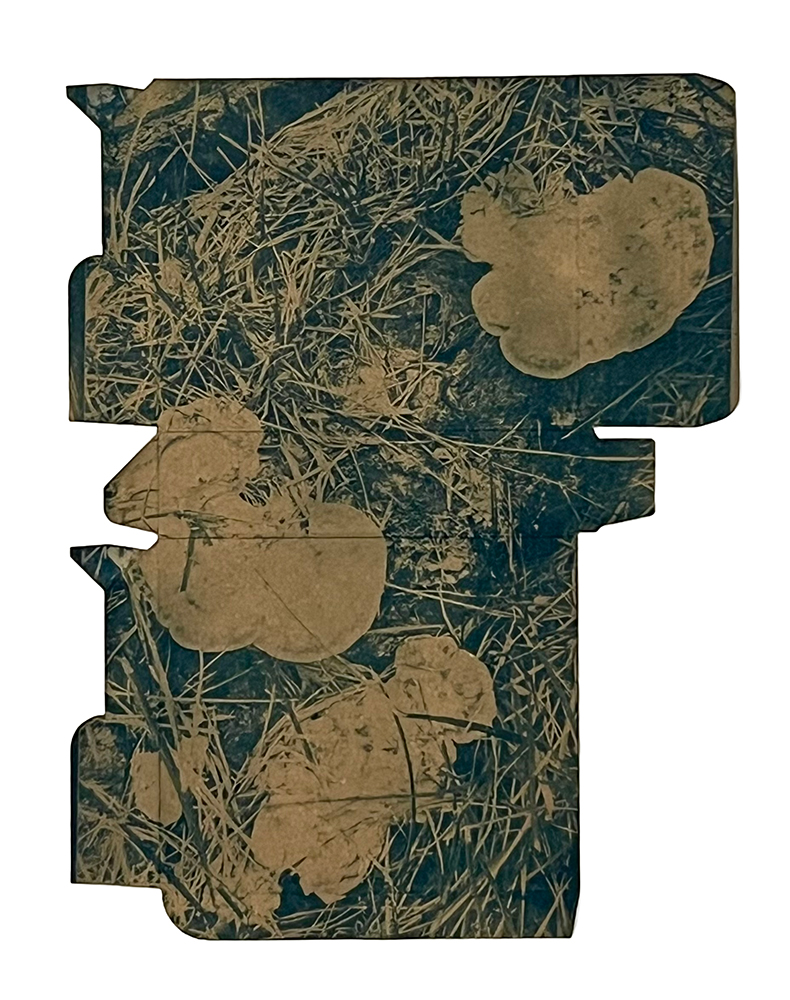
©Arron Levi Foster, Du und ich, Cyanotype on post consumer waste
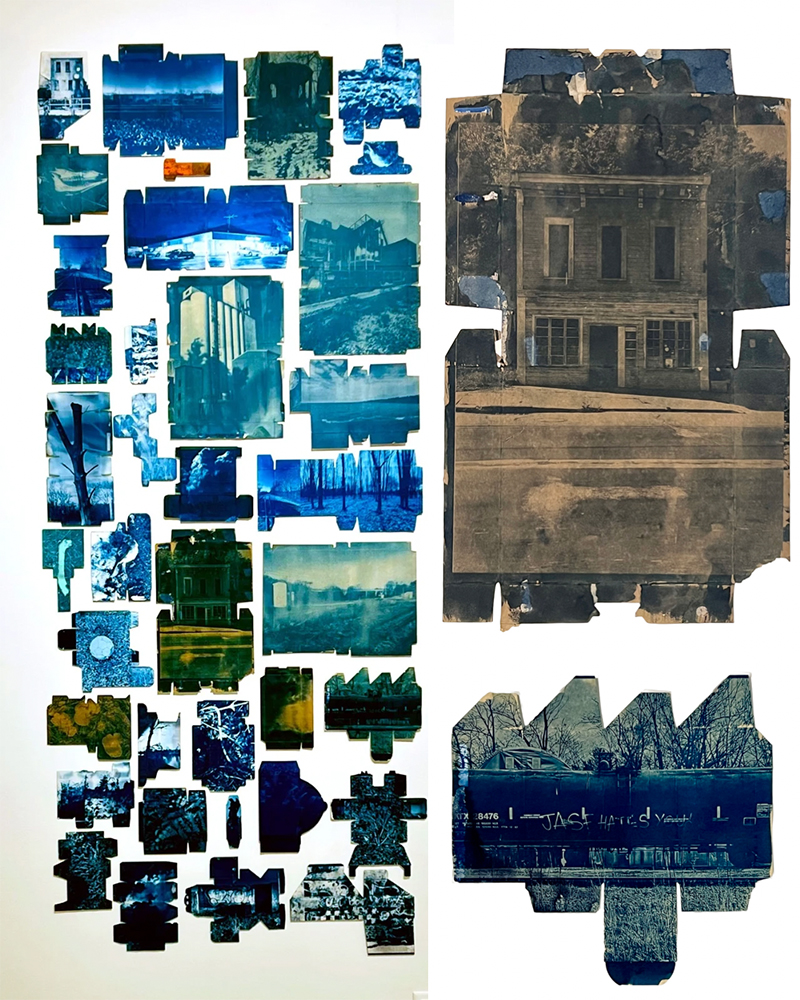
©Arron Levi Foster, Du und ich, Cyanotype on post consumer waste
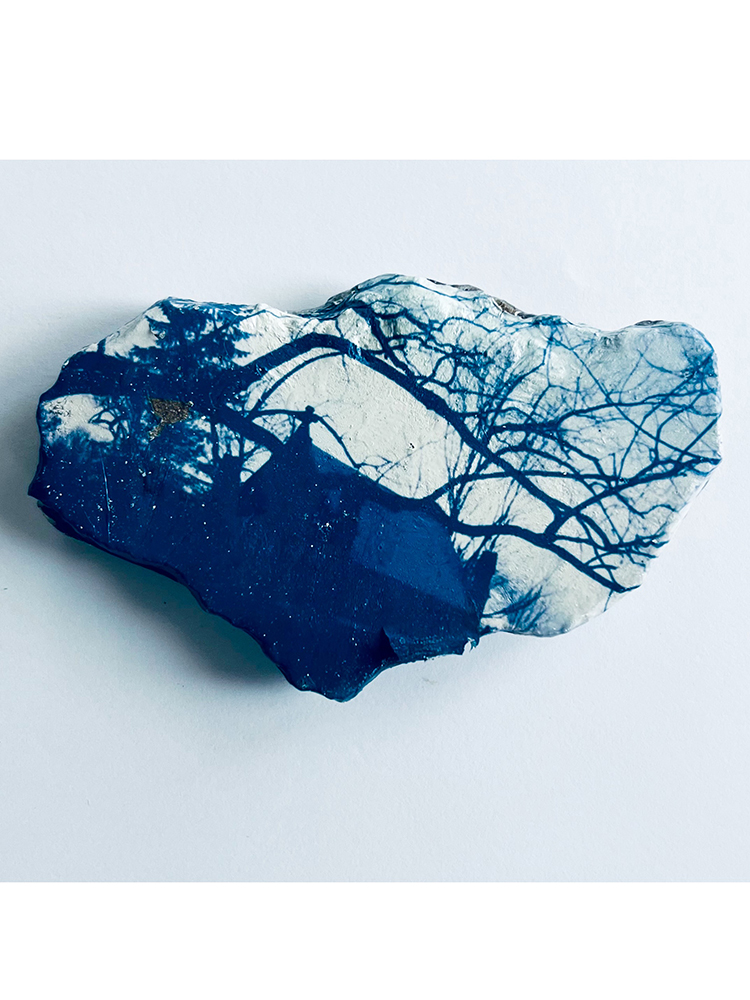
©Arron Levi Foster, Esse Quam Videri, Polaroid transfer on post-industrial waste
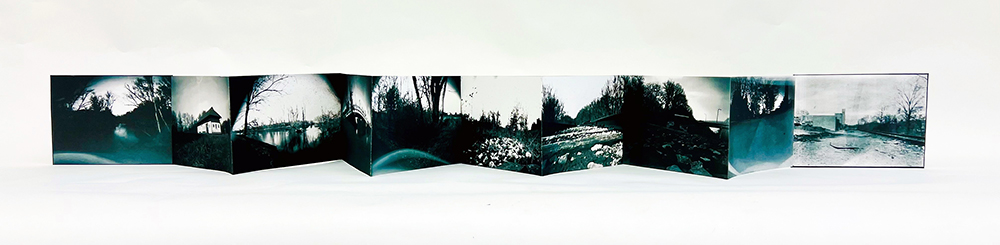
©Arron Levi Foster, Everything,Almost, Unique Artist Book, Pinhole Photographs on Stonehenge paper, Book Cloth
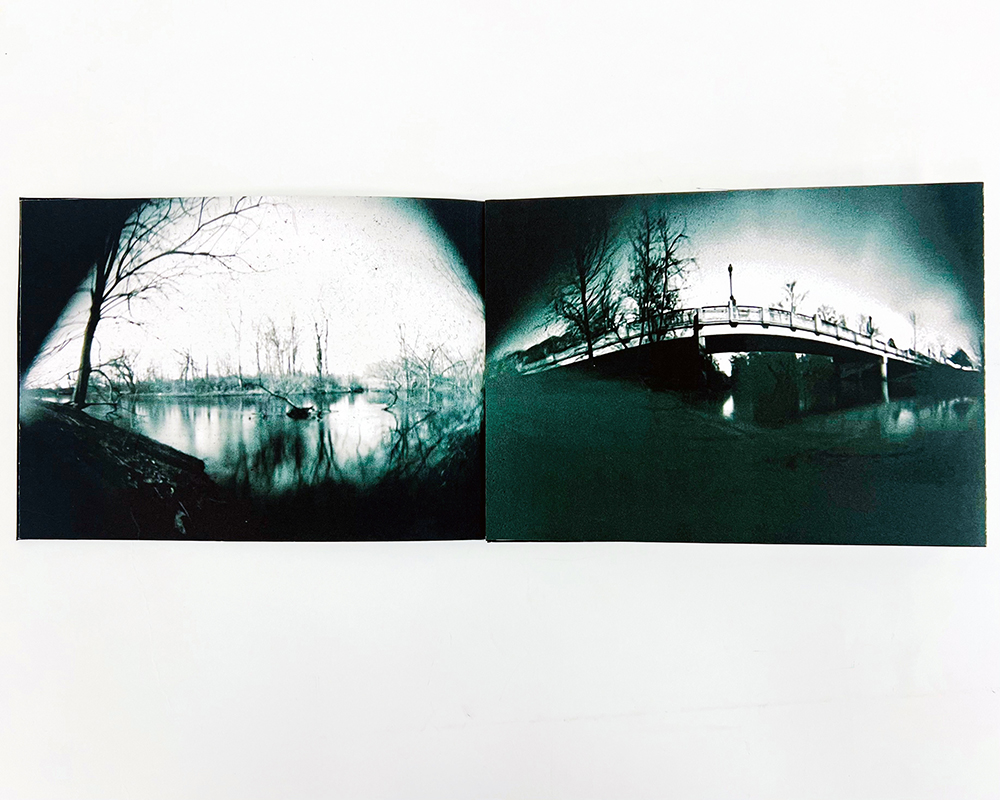
10. Arron Levi Foster, Everything, Almost, Detail, Unique Artist Book, Pinhole Photographs on Stonehenge paper, Book Cloth
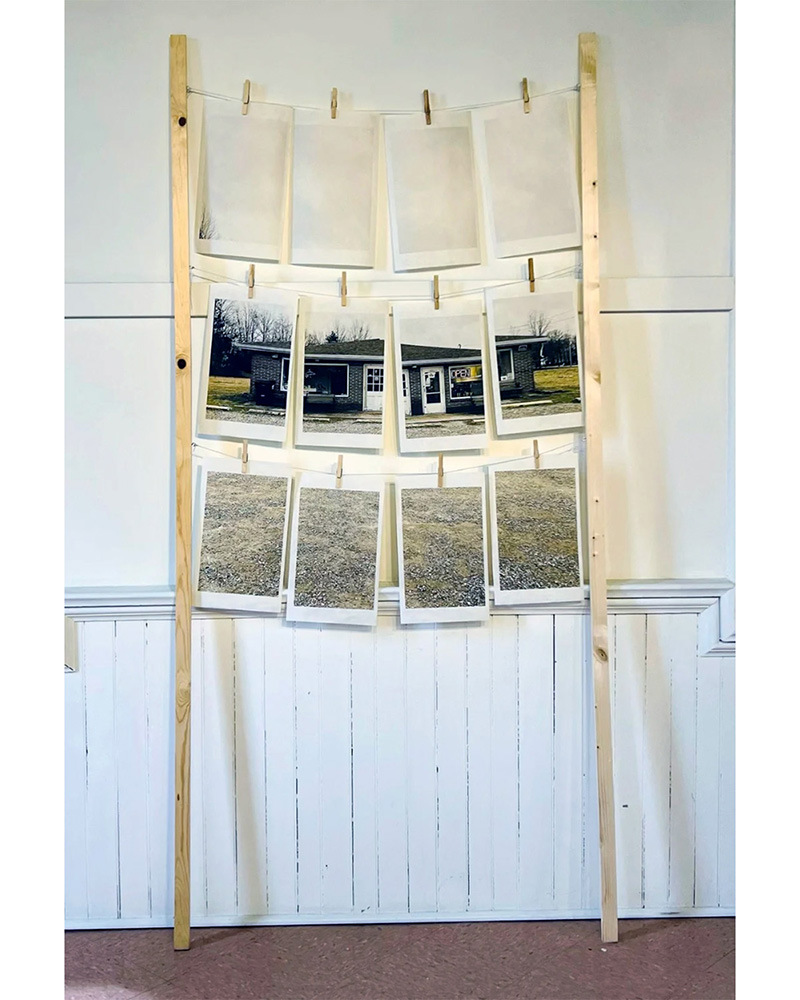
©Arron Levi Foster, Hung out to dry, Archival Pigment Print, Wood & Twine
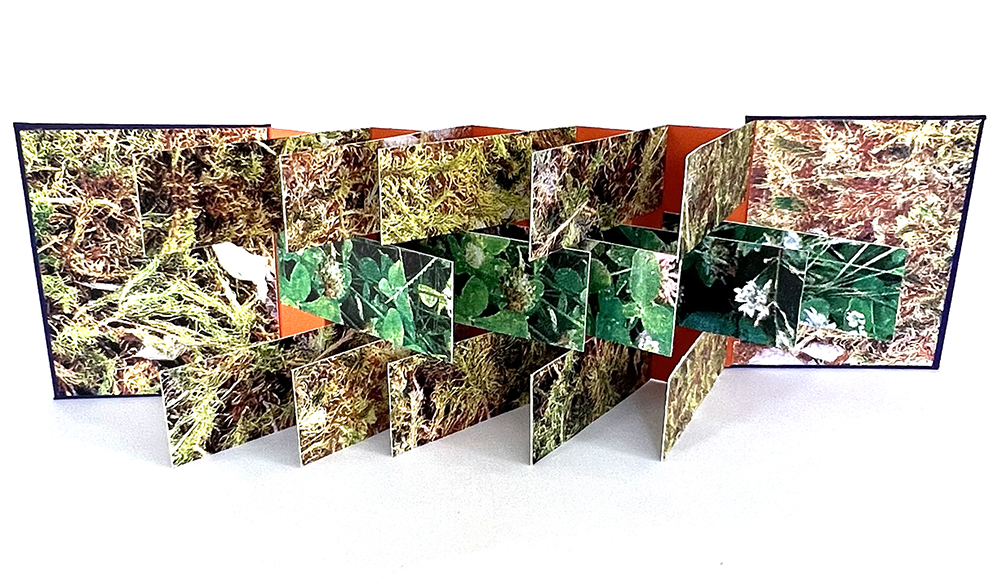
©Arron Levi Foster, Mirth, much, marl, Cloth Bound Flagbook with Screenprint
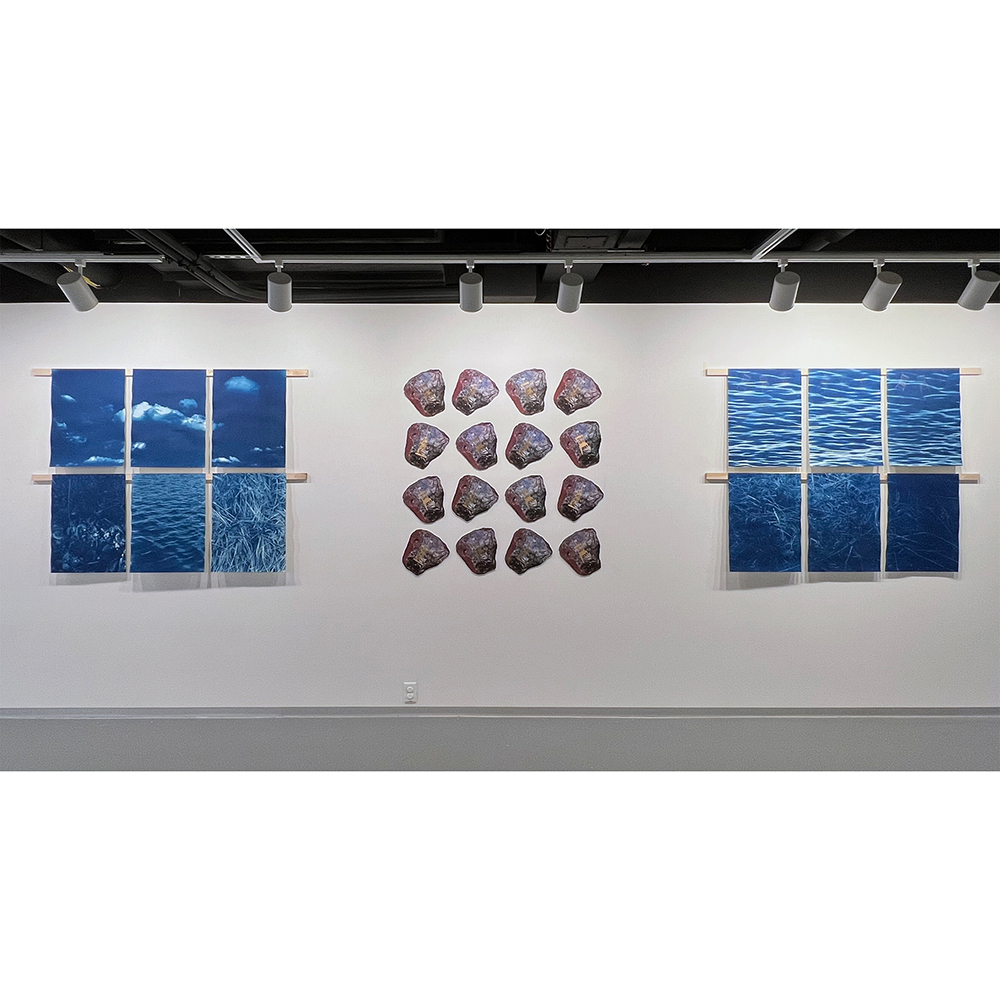
©Arron Levi Foster, A plea for the ash and Mire, Cyanotype, Silkscreen, Foil & Wood
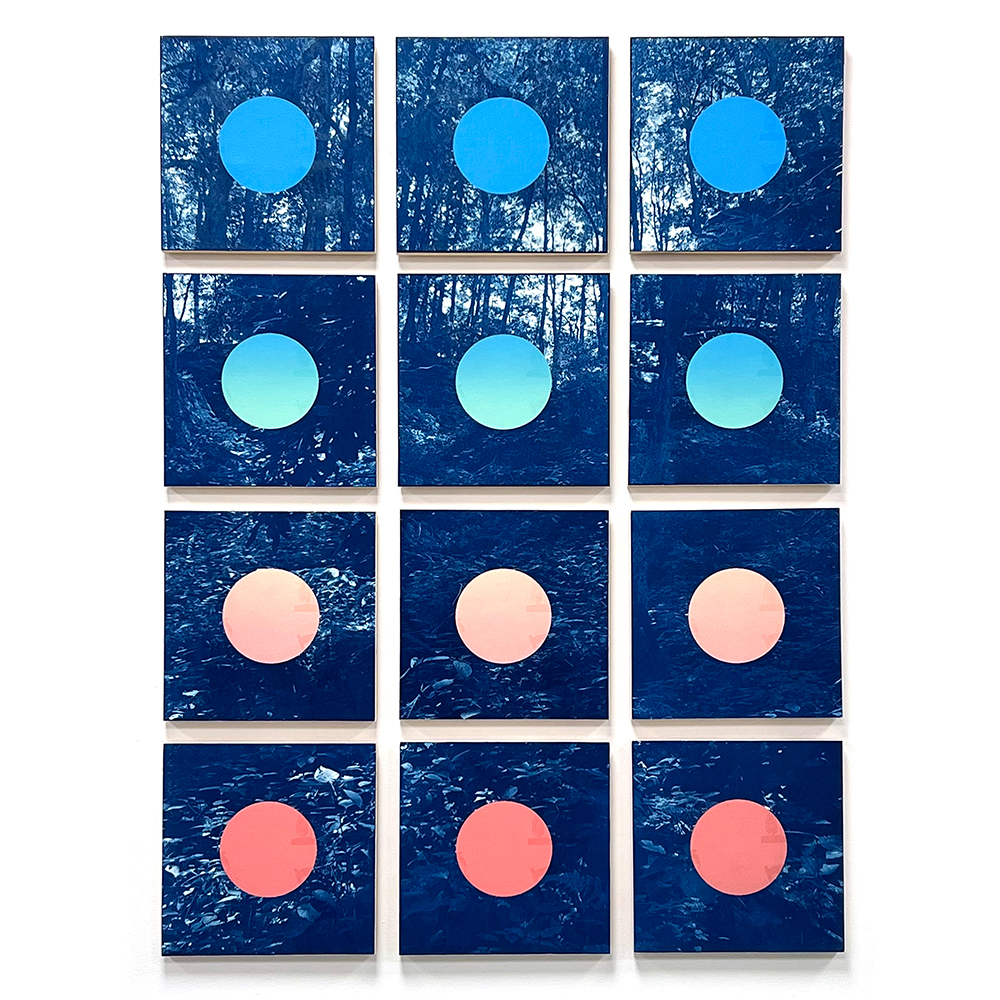
©Arron Levi Foster, Restoration, (Deerfield), Cyanotype and Silkscreen mounted on wooden panel
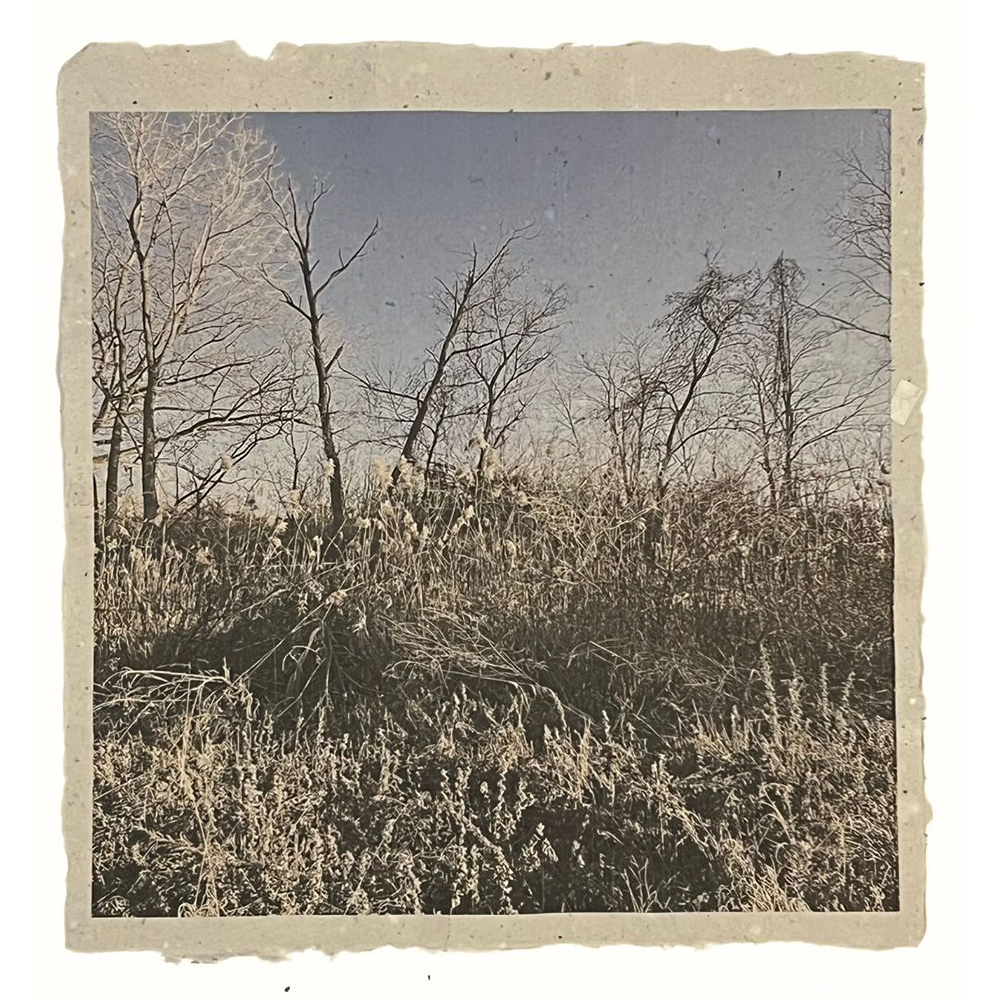
©Arron Levi Foster, Sown with salt, Mogadore Rd. (series), Lumen Print, Pigment Print, Handmade Paper, Screenprint
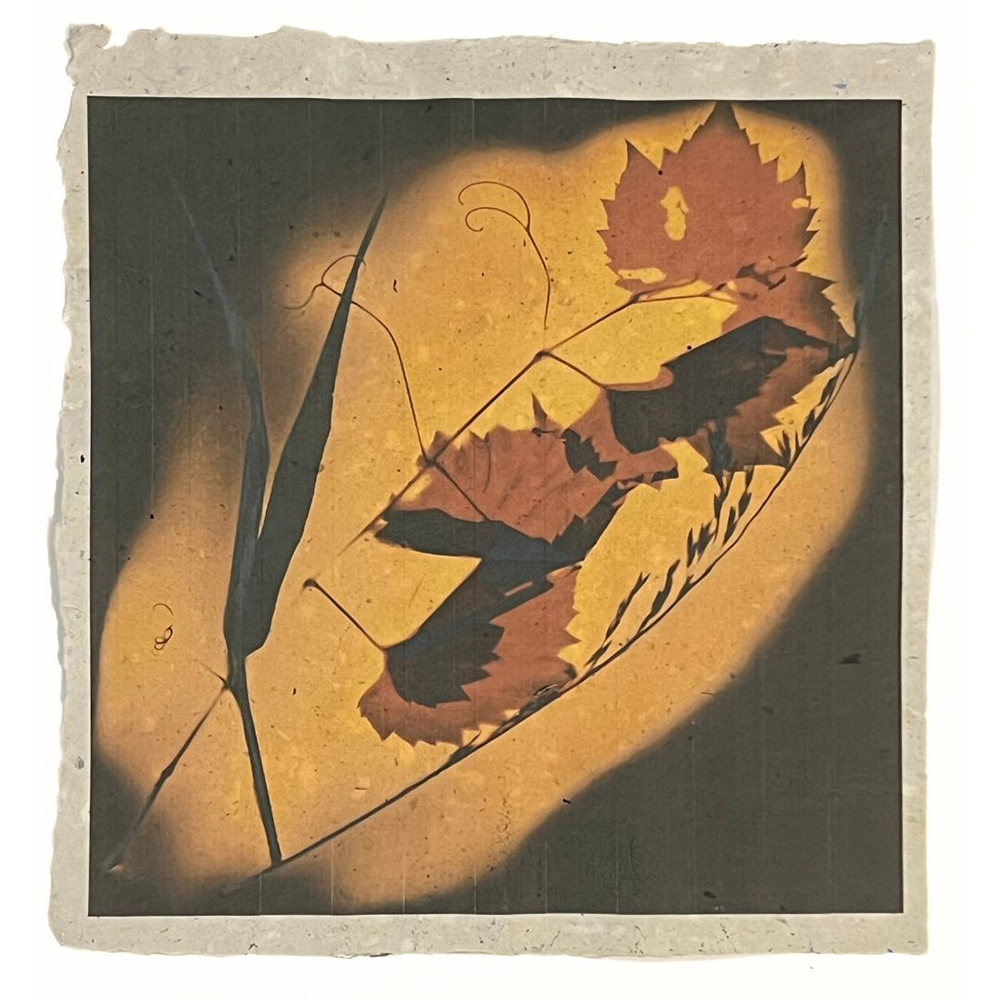
©Arron Levi Foster, Sown with salt, Mogadore Rd. (series), Lumen Print, Pigment Print, Handmade Paper, Screenprint
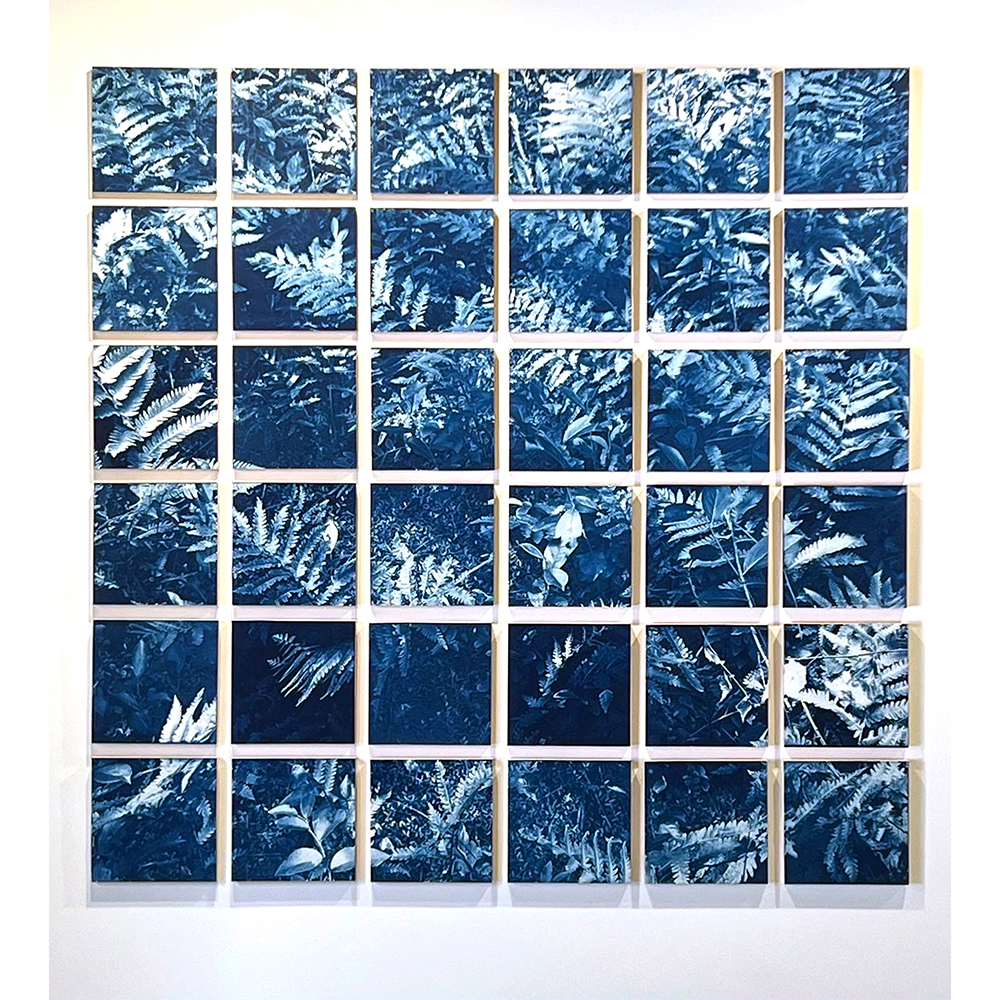
©Arron Levi Foster, The secret things belong, Cyanotype and Silkscreen
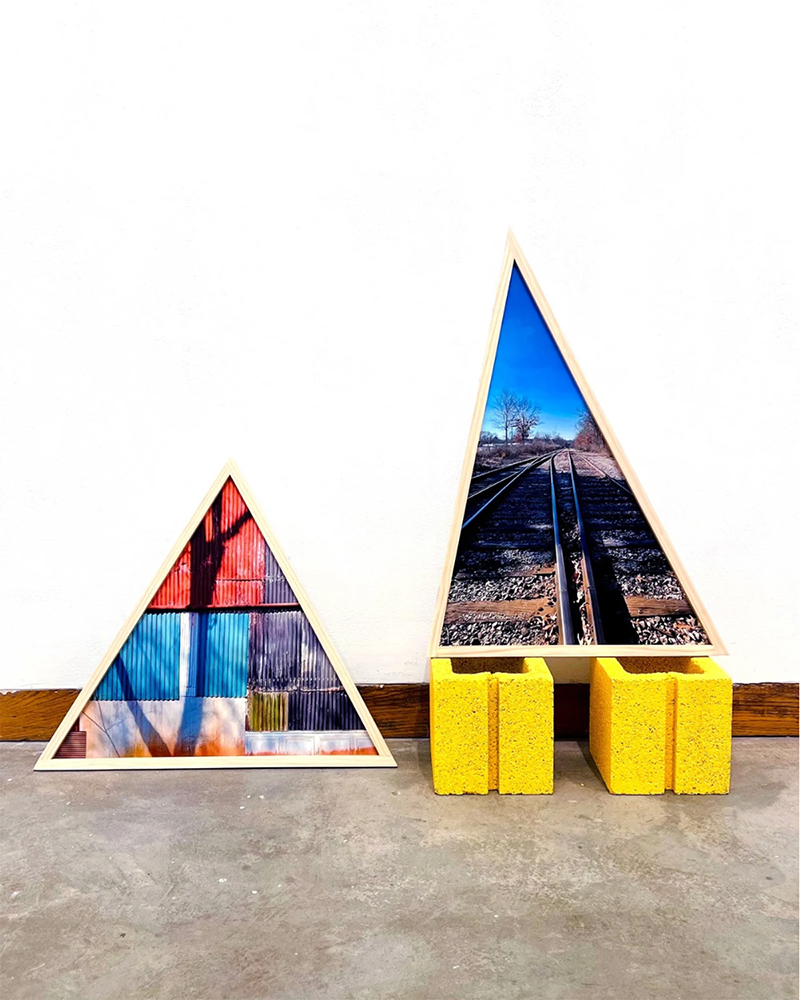
©Arron Levi Foster, Trace & carry, (series), Archival Pigment Print, Cinder Block, Custom Wooden Frames
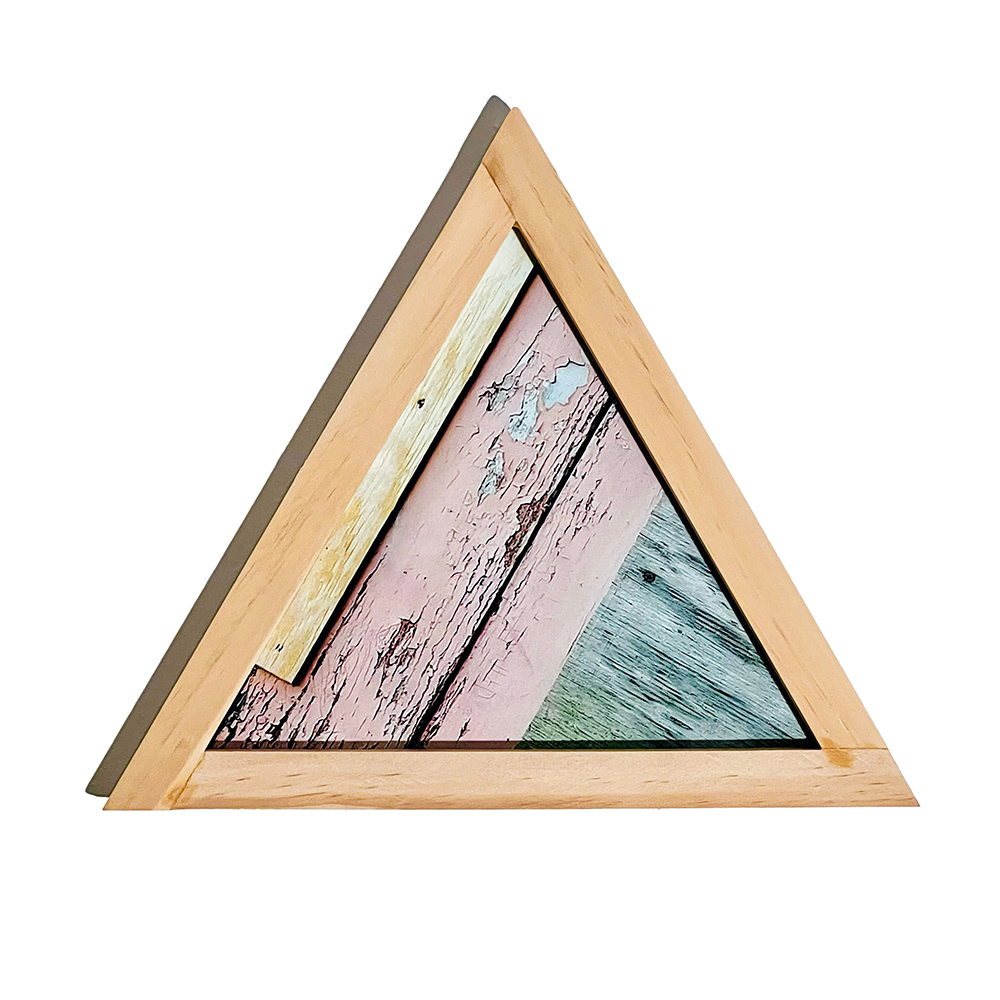
©Arron Levi Foster, Trace & carry, (series), Archival Pigment Print, Cinder Block, Custom Wooden Frames
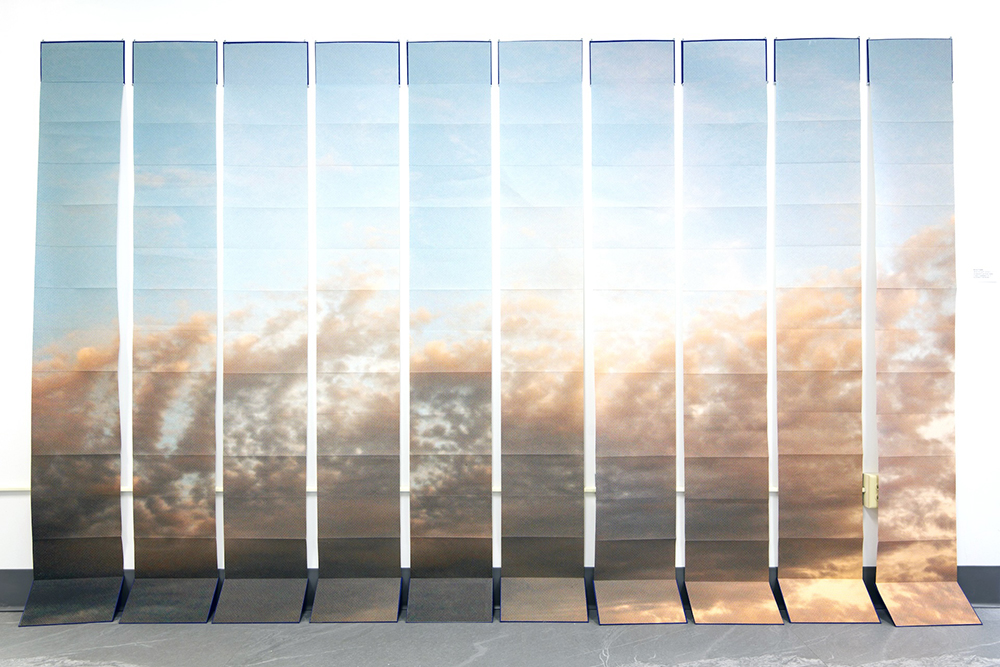
©Arron Levi Foster, While the earth remains, Accordion fold book installation. Screenprint, Archival digital inkjet
Epiphany Knedler is an interdisciplinary artist + educator exploring the ways we engage with history. She graduated from the University of South Dakota with a BFA in Studio Art and a BA in Political Science and completed her MFA in Studio Art at East Carolina University. She is based in Aberdeen, South Dakota, serving as an Assistant Professor of Art and Chair of the Art Department at Northern State University, a Content Editor with LENSCRATCH, and the co-founder and curator of the art collective Midwest Nice Art. Her work has been exhibited in the New York Times, the Guardian, Vermont Center for Photography, Lenscratch, Dek Unu Arts, and awarded through Lensculture, the Lucie Foundation, F-Stop Magazine, and Photolucida Critical Mass.
Follow Epiphany on Instagram: @epiphanysk
Posts on Lenscratch may not be reproduced without the permission of the Lenscratch staff and the photographer.
Recommended
-
Arron Levi Foster: Almost, EverythingOctober 26th, 2026
-
Tree Week: Venessa Monokian: As the Glow GrowsOctober 22nd, 2026
-

Alexa Frangos: (Re)arrangingOctober 14th, 2026
-
The Female Gaze: Kimberly Schneider – Uncovering the IneffableOctober 11th, 2026
-
Winky Lewis: Shadow KidsOctober 4th, 2026